
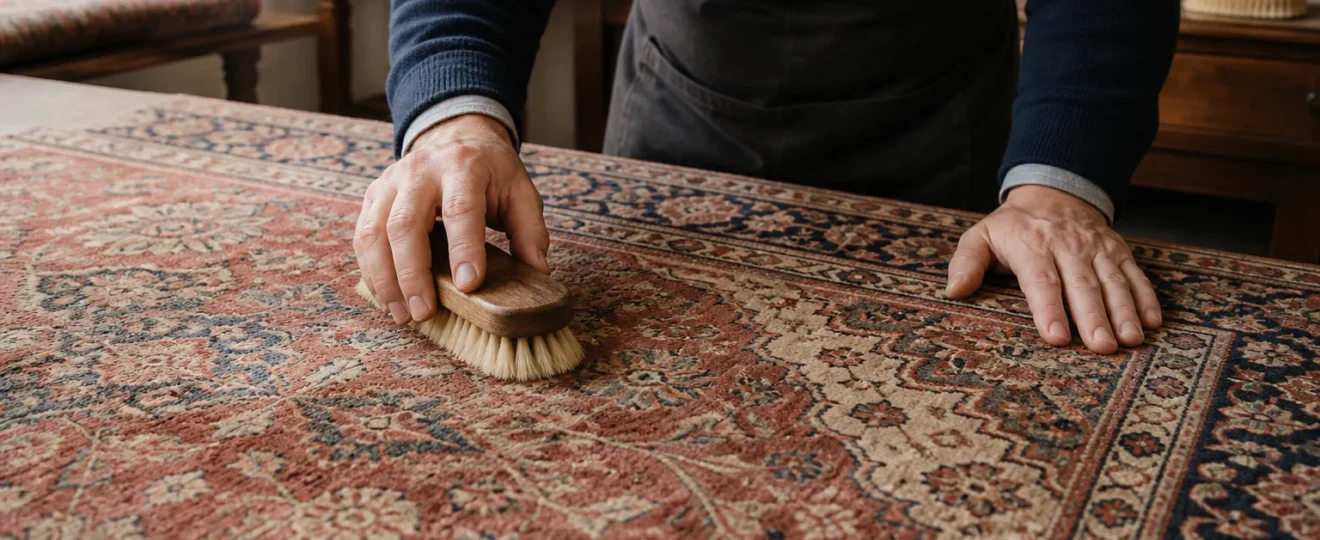
At home, limit Oriental-rug cleaning to gentle dry maintenance and prompt blotting of fresh spills. Do not soak the rug, use a hired carpet-cleaning machine or apply an untested shampoo. A hand-knotted rug may combine wool, silk, cotton, natural or synthetic dyes and previous repairs, so safe wet cleaning begins with identification and testing.
What you can safely do at home
- Vacuum dry surface dust with low suction and a plain floor tool.
- Keep rotating brushes away from the pile and fringe.
- Blot a fresh spill with clean white absorbent cloths.
- Rotate the rug periodically to balance wear and light.
- Clean the floor and inspect the underlay when the rug is lifted.
These steps are maintenance, not full washing. Embedded soil, odour, pet contamination, dye movement and old stains require a method chosen for the individual rug.
How to vacuum an Oriental rug
- Inspect first. Look for loose fringe, open edges, tears, powdery areas and unstable repairs. Do not vacuum a weak area directly.
- Reduce the suction. Use the lowest effective setting and a non-powered floor head.
- Follow the pile. Move slowly in the direction in which the pile lies smooth. Avoid aggressive back-and-forth rubbing.
- Protect the fringe. Clean fringe separately by hand or leave it for a specialist; do not pull it through the vacuum head.
- Check beneath. When the rug can be moved safely, clean the floor and inspect the underlay. The reverse may be vacuumed cautiously if the structure is sound.
For a fragile rug, a clean mesh screen can prevent the nozzle from catching loose material. If the pile is splitting, powdering or lifting, stop and request a condition assessment.
What to do immediately after a spill
Act quickly, but do not rush into chemical treatment. Place clean white absorbent material onto the spill and press gently. Replace it as it becomes damp. Work from the outside towards the centre so the affected area does not spread.
Do not scrub. Do not add heat. Avoid coloured towels that could transfer dye, and do not pour water through the rug. If the liquid is oily, strongly coloured, hot, acidic, contains milk or is associated with pet contamination, contact a specialist promptly and explain exactly what was spilled.
Why home carpet machines are risky
Domestic extraction machines are designed for fitted carpet, not for every combination of hand-knotted pile, foundation and dye. Excess water can carry unstable colour, produce tide marks, distort the rug or leave the foundation damp. Strong agitation can alter the pile, while detergent residue may attract soil.
Steam cleaners introduce both heat and moisture. These can be especially harmful to wool, silk, old repairs and rugs with unknown dyes. A rug that looks dry at the surface can still retain moisture inside its foundation.
Can you use baking soda, vinegar or washing-up liquid?
We do not recommend improvised mixtures on a valuable or hand-knotted rug. Products vary in composition and concentration, and a mixture that seems mild can change colour, leave residue or set a stain. Baking soda can become difficult to remove from dense pile; acidic or alkaline solutions may affect dyes and protein fibres.
When professional rug cleaning is the right choice
- The rug needs more than dry surface dust removal.
- There is pet urine, persistent odour, mould concern or water damage.
- Colours have transferred onto a blotting cloth or appear to be moving.
- The pile contains silk, metallic thread or an unknown fibre.
- The fringe, edges or foundation are weak.
- The rug is old, valuable, historically important or has previous repairs.
A responsible cleaner should examine the rug, identify materials as far as practical, test for dye movement and explain the proposed process before treatment. Cleaning and restoration are related but separate: unstable edges or holes may need securing before a full clean.
How often should an Oriental rug be professionally cleaned?
There is no useful fixed interval for every rug. The right timing depends on foot traffic, outdoor soil, pets, spills, fibre, colour and construction. Clean because condition and embedded soil indicate a need, not simply because a calendar date has arrived.
Good preventive care can extend the interval: use entrance matting, remove outdoor shoes where practical, fit a suitable underlay, rotate the rug and keep food or plant water away from vulnerable areas.
For ongoing maintenance, see our nine hand-knotted rug care tips. If your rug needs an assessment, explore professional rug and carpet cleaning or contact the Azar Rugs team.
Frequently asked questions
Can I wash an Oriental rug in the bath?
No. Immersion without fibre, dye and condition testing can cause colour bleed, distortion and slow drying within the foundation.
Can I pressure-wash an Oriental rug?
No. High pressure can disturb pile, force soil and water through the structure and damage weak areas.
How do I remove a fresh water spill?
Blot with clean white absorbent material and allow air to circulate. If colour transfers, the rug remains wet internally or a large area is affected, seek specialist help.
Further reading
The Canadian Conservation Institute’s carpet and rug care note covers low-suction vacuuming, spill response and the risks of commercial shampoos.