
Key takeaways
- Look at the field, the medallion, the border and how the parts relate to each other. Each shapes how the design reads.
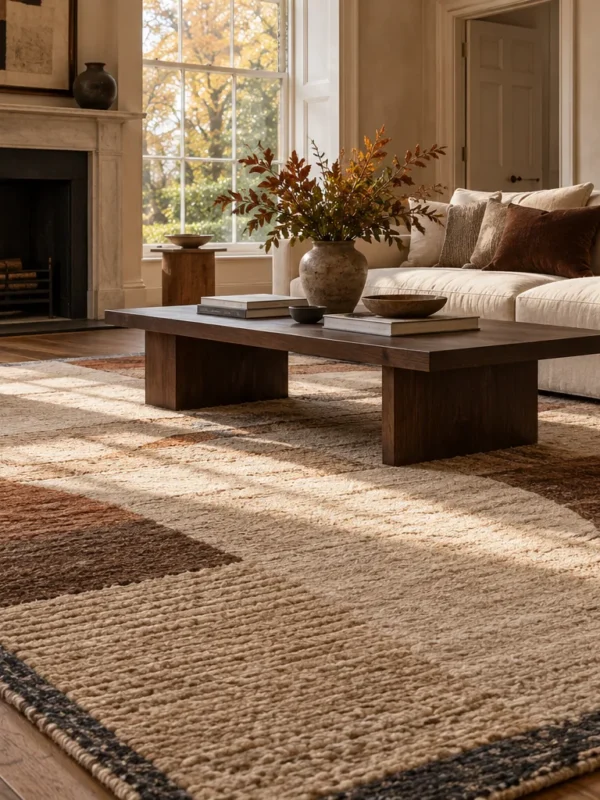
- Imagine your furniture on the rug: a coffee table or a bed can hide the centre.
- A motif alone does not establish a rug’s age, origin, construction or fibre. Check the specification and provenance separately.
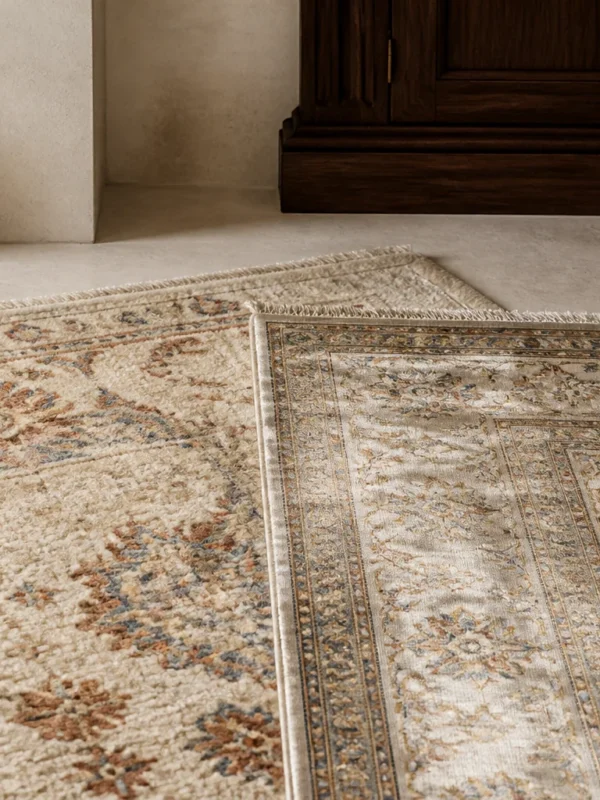
- Ask for a complete view, a close detail and a reverse or edge view before deciding.
A patterned rug rewards two kinds of looking. From the doorway, you notice its overall colour and shape. Up close, you begin to see the smaller decisions: a flower repeated in the border, a corner motif answering the centre, or an open area that gives a dense drawing room to breathe.
You do not need a specialist vocabulary to enjoy those details. A few useful terms make it easier to compare pieces and explain what attracts you to a particular rug.
The field: the design’s main ground
The field is the central area inside the borders. It may carry a single medallion, a repeating arrangement of motifs or a more open composition. Start here when comparing two rugs. Does the eye rest on one focal point, or travel across the whole surface?
A rug with an all-over pattern can read differently beneath a table from one with a strongly defined centre. Neither is the better design. The question is how much of the drawing will remain visible in your room, and where you want attention to settle.
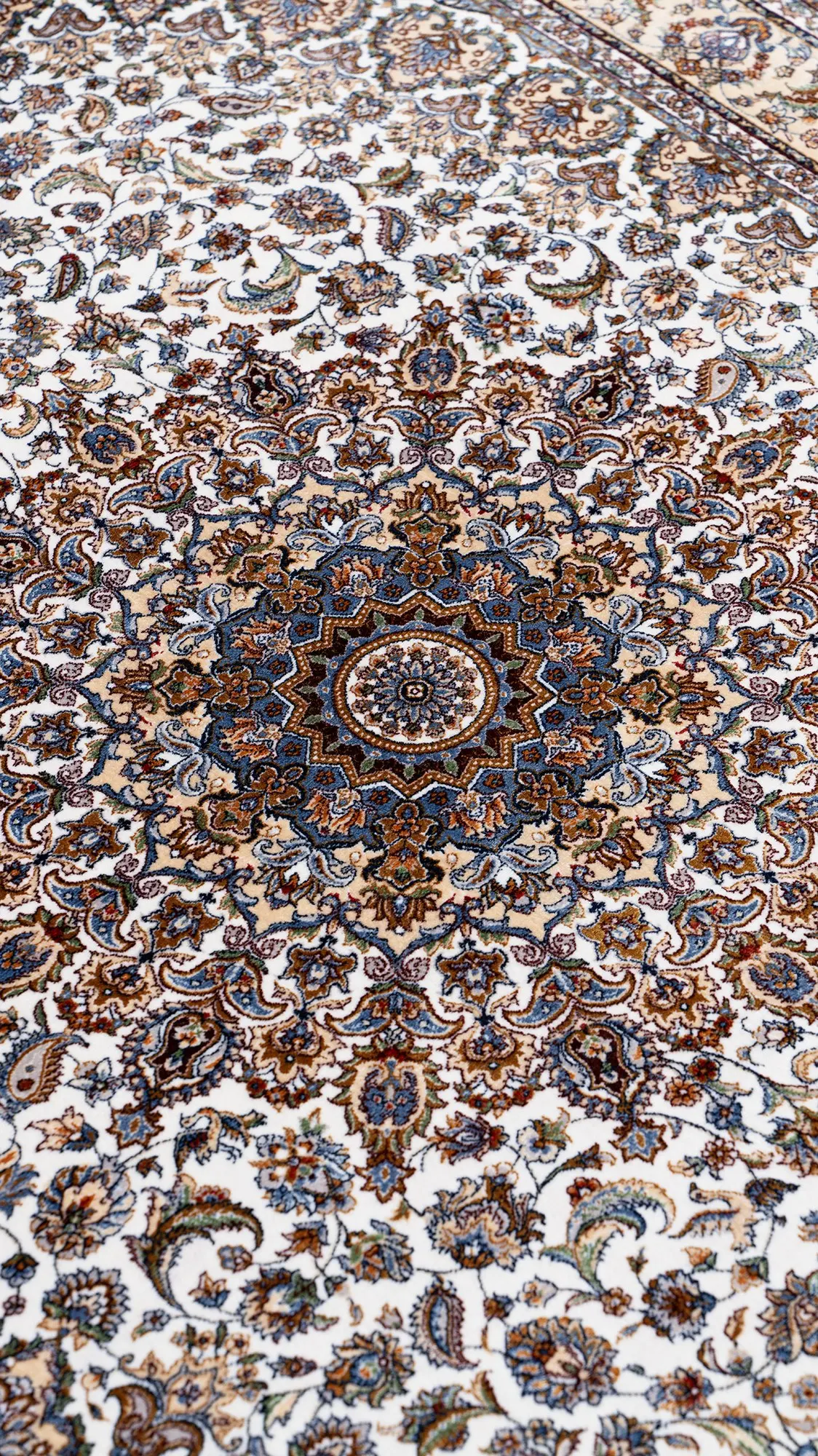
The medallion: a centre of gravity
A medallion gives the composition a focal point. Look at its shape, the space around it and its relationship to the corners. It may feel crisp and architectural, or softer and more floral.
Before choosing a medallion rug, imagine your furniture in place. A coffee table may partly conceal the centre while leaving the surrounding field visible. A bed can cover much more of it. Decide whether that feels right for the room rather than treating the uncovered product photograph as the finished arrangement.
The border: a frame with its own rhythm
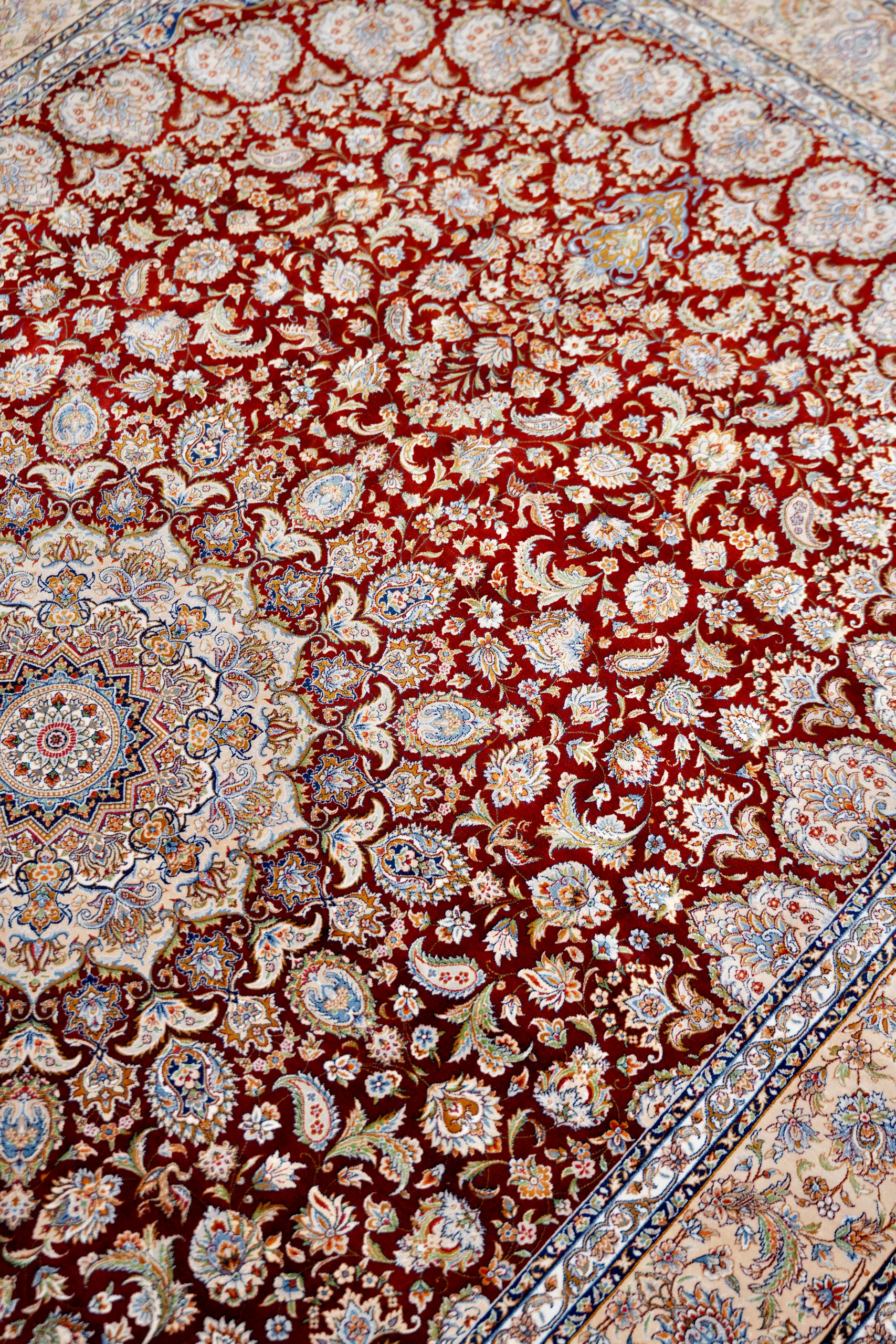
Borders give the rug an outer structure. Look for the widest band first, then the narrower bands that sit beside it. Compare their scale with the field. A broad, richly detailed border can feel substantial; a narrower frame may allow the centre to dominate.
Notice how the pattern turns at the corners. This is an enjoyable detail to examine in a clear photograph, and a useful reminder that a rug’s design is more than its central motif.
Look at the relationship between parts
Choose one small element and follow it through the rug. A colour in the centre may reappear in the border. A curved stem may answer a shape in a corner. These relationships can give a complex drawing a sense of order.
A motif’s appearance alone does not establish a rug’s age, origin, construction or fibre. Treat design as one part of the evidence and check the product specification, provenance information and any certificate separately. Our construction buying guide explains another part of that comparison.
Ask for three views before deciding
- A complete view: see the proportions of the field, corners and border together.
- A close detail: inspect the drawing and surface without relying on a small thumbnail.
- A reverse or edge view: use this alongside the written construction and condition information.
For an older or unusual piece, ask a specialist to explain the features rather than inferring a weaving region from a familiar-looking motif. Clear descriptions are more useful than an impressive label without supporting detail.
Take this slower way of looking into the Azar Rugs collection. If a particular medallion, border or colour relationship catches your eye, ask us for additional views and the details behind the piece.