
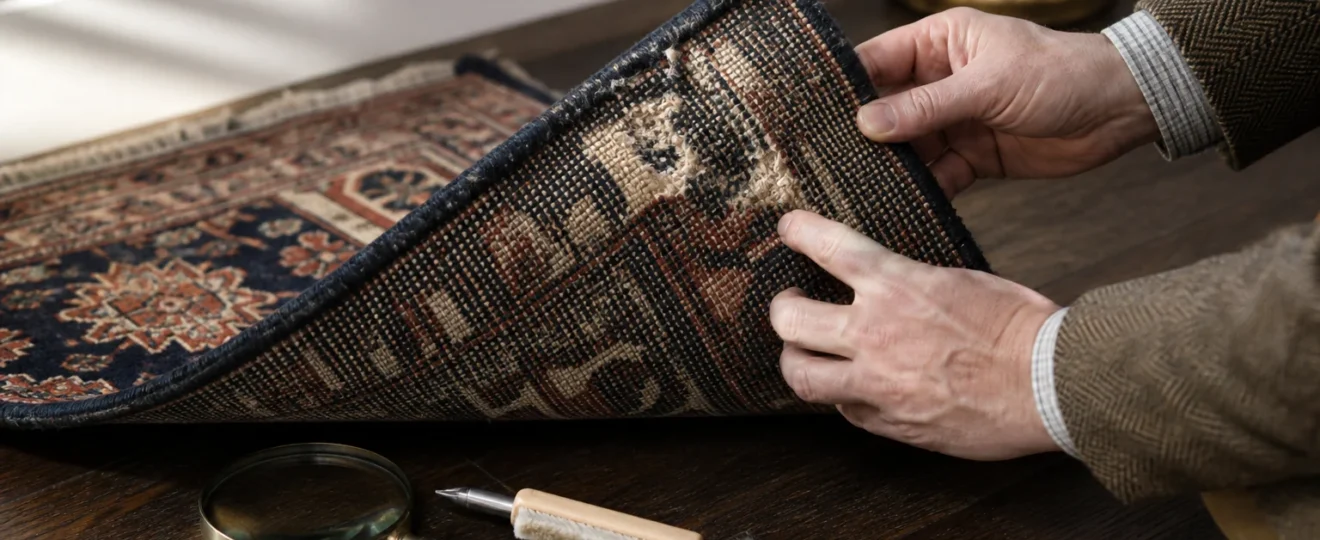
The clearest signs of rug moth activity are irregular areas of missing wool pile, loose fibres, fine webbing, cases or larvae in dark and undisturbed parts of the rug. Adult moths are a warning signal, but the larvae cause the textile damage. If you suspect activity, reduce movement of the rug, inspect the surrounding room and seek prompt advice.
What does moth damage look like on a rug?
- Patchy “grazed” areas where the wool pile has disappeared.
- Small holes or exposed foundation threads.
- Loose wool fibres that lift away without normal resistance.
- Silken webbing, tubes or portable cases among the fibres.
- Larval skins, granular debris or live cream-coloured larvae.
- Activity concentrated beneath furniture, along edges or on the reverse.
Normal wear is more likely to appear in repeated walking routes and may flatten or gradually abrade the pile. Insect damage is often irregular and occurs where the rug receives little light or disturbance. A specialist can distinguish active infestation from historic damage and from wear caused by use.
Why do moth larvae attack wool rugs?
Wool is a keratin-based animal fibre and can provide food for clothes moth larvae. Dust, hair, food residues and other organic soiling can make a quiet area more attractive to textile pests. Silk and even plant or manufactured fibres may also be damaged when soiled or when larvae travel through them to reach a food source.
The adults prefer sheltered places to lay eggs. This is why damage may develop beneath a sofa, behind a cabinet or on the reverse long before it is visible from the centre of the room.
What to do if you suspect rug moths
- Document the evidence. Photograph the front, reverse, edges and any larvae or cases in good light.
- Limit spread. Avoid carrying the rug through the building unnecessarily. Ask a professional how to contain it safely for transport.
- Inspect nearby textiles. Check wool upholstery, stored knitwear, felt, animal hair and other natural-fibre items in the same room.
- Clean the surroundings. Vacuum floor edges, cracks, beneath furniture and the underlay. Dispose of vacuum contents outside the living area.
- Arrange identification and treatment. Effective control depends on the pest, the rug’s materials, its size and whether activity is still present.
Do not spray a valuable rug with a general household insecticide unless a qualified pest or conservation professional has confirmed that the product and method are appropriate. Residues may affect people, pets, dyes and future conservation work.
Can you treat rug moths by freezing?
Low-temperature treatment is used in conservation, but it requires controlled temperatures, correct packaging and a process matched to the object. A domestic freezer may be too small, too warm or too variable for a large rug, and condensation during warming can create another risk. Treat freezing as a specialist method rather than a casual home remedy.
How to help prevent moth damage
Disturb and inspect quiet areas
Move light furniture where safe and inspect beneath it several times a year. Lift accessible corners, check the reverse and look along skirting boards. Rooms with wool rugs should not have permanently undisturbed zones.
Remove dust and organic debris
Vacuum the rug gently with low suction and no rotating brush, then clean the floor, underlay and room edges. Avoid catching fringe or loose pile. A fragile rug should be assessed before direct vacuuming.
Monitor rather than guess
Appropriate pheromone traps can help indicate adult clothes moth activity, but they do not remove larvae or replace a full inspection. Record where and when adults are found so a pest professional can interpret the pattern.
Check rugs before storage
A rug should be clean and completely dry before it is rolled for storage. Use clean, breathable protective material and keep the roll off the floor in a stable, inspected location. Do not fold a rug into a dark cupboard and leave it unchecked.
When does moth damage need restoration?
Once pest activity is controlled, restoration can address structural and visual loss. A specialist may secure loose knots, stabilise exposed foundation, rebuild an edge or reweave a local area. The appropriate level of intervention depends on the rug’s use, value, age and the amount of original material remaining.
Pest treatment and textile repair are separate stages. Repairing a rug before the source of infestation is resolved risks new damage.
Compare moth damage with the other signs a rug may need restoration. For photographs, assessment and repair options, visit our rug restoration service or contact our London team.
Frequently asked questions
Will vacuuming remove rug moths?
Vacuuming can remove some debris and may reduce pest habitat, but it cannot be relied on to eliminate every egg or larva. It should form part of inspection, cleaning and an appropriate treatment plan.
Do mothballs protect rugs?
They are not a substitute for cleaning, inspection and correct storage, and their vapours can present health and material concerns. Seek safer, professionally recommended control methods.
Can moth-damaged pile be repaired?
Often, yes. Options range from stabilising the foundation to local reweaving. The result and cost depend on the size, structure and location of the loss.
Further reading
The Canadian Conservation Institute’s preventive conservation guidance describes textile-pest evidence including grazing, webbing, cases and larval skins.